
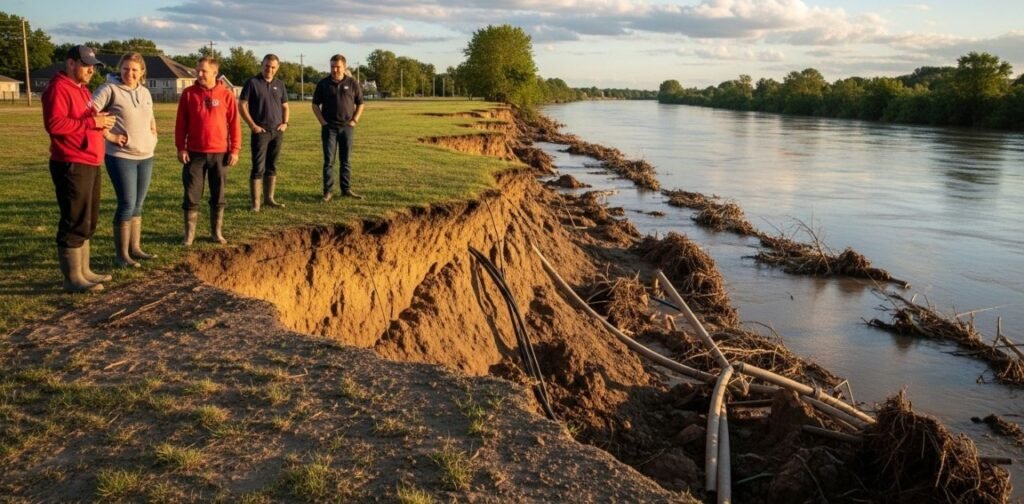
Introduction: What Happened at Iford Playing Fields?
In recent years, concerns about environmental stability have intensified, particularly in regions where riverside landscapes meet community spaces. One such pressing issue is the riverbank collapse at Iford Playing Fields, an area that holds both recreational and ecological significance. Nestled near Bournemouth, this green space has long been valued by local families, athletes, and nature enthusiasts. However, the collapse of the riverbank along the River Stour has raised alarm bells for residents, environmentalists, and local authorities alike.
The problem is not simply about losing a patch of land; it reflects broader challenges linked to climate change, rising river levels, and insufficient infrastructure to manage natural processes. Iford Playing Fields serves as a perfect example of how environmental instability directly impacts communities, recreation, and local ecosystems.
Understanding why this collapse occurred requires analyzing geological, hydrological, and human-driven factors. Beyond causes, we must also consider the social implications: safety concerns, financial costs, and long-term solutions to prevent further erosion.
This article dives deep into the phenomenon of the riverbank collapse at Iford Playing Fields, exploring its causes, effects, mitigation strategies, and the role of local governance in safeguarding public spaces.
Causes of Riverbank Collapse at Iford Playing Fields
Riverbanks collapse when natural and human factors combine to weaken soil structure, leading to erosion and instability. The case at Iford Playing Fields is no exception. Several interlinked causes contributed to this environmental hazard:
1. Hydrological Pressure
The River Stour, which flows near Iford Playing Fields, has experienced fluctuating water levels due to heavy rainfall and seasonal flooding. When river levels rise and fall rapidly, soil saturation increases, making the bank highly unstable. Over time, this weakens the bank’s integrity and causes sections to collapse into the water.
2. Soil Composition
The soil structure near Iford Playing Fields contains fine sediments that are particularly vulnerable to erosion. Unlike rocky banks that offer resilience, sedimentary soils are prone to washing away under pressure, accelerating the collapse.
3. Vegetation Loss
Riverbank vegetation plays a crucial role in holding soil together. If areas around Iford Playing Fields lost natural plants—whether due to human interference, recreational activity, or invasive species—the bank would become more fragile.
4. Climate Change
Global climate shifts are leading to extreme weather patterns, including prolonged rainfall in the UK. This places continuous strain on waterways, increasing flood risks and accelerating erosion rates.
5. Human Activity
Recreational activities at Iford Playing Fields, including sports events and foot traffic along the riverside, may have indirectly worsened the bank’s condition. In addition, insufficient protective infrastructure, such as retaining walls, has left the bank vulnerable.
The collapse at Iford is therefore not a random event but the result of cumulative natural and anthropogenic pressures.
Impacts on the Community and Environment
The riverbank collapse at Iford Playing Fields has had wide-ranging impacts that extend beyond the immediate loss of land. These effects touch social, economic, and ecological aspects of local life:
1. Public Safety Concerns
Collapsed banks create dangerous zones for park visitors, especially children and elderly residents. Without barriers, the risk of falling into the river increases significantly.
2. Recreational Limitations
Iford Playing Fields is widely used for football matches, walking, and community events. With parts of the land eroded, access to certain areas is restricted, disrupting local clubs and family outings.
3. Ecological Disruption
Riverbank collapse also affects aquatic ecosystems. Sediments released into the river reduce water quality, impact fish habitats, and increase turbidity. Local wildlife dependent on riverbank vegetation also suffers.
4. Economic Costs
Repairing riverbanks and stabilizing land requires significant financial investment. Local councils face budget constraints, making it difficult to balance immediate repairs with long-term environmental strategies.
5. Psychological Impact
For many residents, Iford Playing Fields is more than a recreational area—it is a community identity. Watching it deteriorate under environmental stress generates frustration, concern, and a sense of helplessness.
The collapse is thus a community-wide issue, intertwining environmental degradation with human wellbeing.
Solutions and Preventive Measures
Tackling riverbank collapse requires a combination of engineering, ecological, and community-driven approaches. For Iford Playing Fields, potential solutions include:
1. Bank Reinforcement
Installing retaining walls, riprap (rock layers), or gabions (wire-mesh rock cages) can stabilize vulnerable sections of the bank.
2. Vegetation Restoration
Replanting native trees and grasses along the river’s edge provides natural reinforcement, as roots hold soil together and absorb excess water.
3. Drainage Management
Improving stormwater drainage systems prevents excess runoff from saturating the soil. Sustainable drainage systems (SuDS) can help balance hydrological pressure.
4. Community Involvement
Engaging local groups to monitor erosion, plant vegetation, and maintain safe access points builds a sense of ownership and responsibility.
5. Policy and Funding Support
Local councils and environmental agencies must allocate funds for preventive infrastructure, supported by national climate adaptation policies.
Long-term resilience requires integrating engineering with natural solutions, ensuring Iford Playing Fields remains safe and usable.
7 FAQs About Riverbank Collapse at Iford Playing Fields
1. What caused the riverbank collapse at Iford Playing Fields?
A mix of soil erosion, heavy rainfall, climate change, and recreational pressure contributed to the collapse.
2. Is the area safe for public use now?
Sections may remain restricted until stabilization efforts are completed, but safety barriers are often installed as a precaution.
3. Who is responsible for fixing the collapse?
Local councils in collaboration with environmental agencies typically oversee riverbank repairs and management.
4. Can this problem happen again?
Yes, without preventive measures, further erosion may occur due to ongoing river dynamics and climate pressures.
5. How does it affect wildlife?
Collapsed banks disrupt habitats, reduce water quality, and damage breeding areas for fish, birds, and small mammals.
6. What solutions are being considered?
Vegetation restoration, retaining walls, community monitoring, and improved drainage systems are key options.
7. How can the community help?
Residents can participate in awareness campaigns, volunteer for restoration projects, and advocate for stronger environmental policies.
Conclusion: Safeguarding Iford Playing Fields for the Future
The riverbank collapse at Iford Playing Fields is more than an environmental issue—it represents the growing challenges communities face in a changing climate. The incident illustrates how natural forces, human activity, and infrastructure gaps intersect to create risks that directly affect daily life.
For local residents, Iford is not just a playing field—it is a communal hub, a place where children play, sports teams practice, and families connect with nature. Allowing it to deteriorate unchecked would mean losing a vital part of community heritage.
The path forward requires a collaborative approach: councils providing resources, environmental agencies implementing science-backed strategies, and residents actively participating in preservation. Only then can the field be protected for future generations.
Ultimately, the collapse at Iford serves as a wake-up call. It reminds us that in the face of climate change and environmental fragility, we cannot take local landscapes for granted. By investing in resilient infrastructure, ecological restoration, and community awareness, we can turn this crisis into an opportunity—transforming Iford Playing Fields into a model for sustainable riverbank management in the UK.