
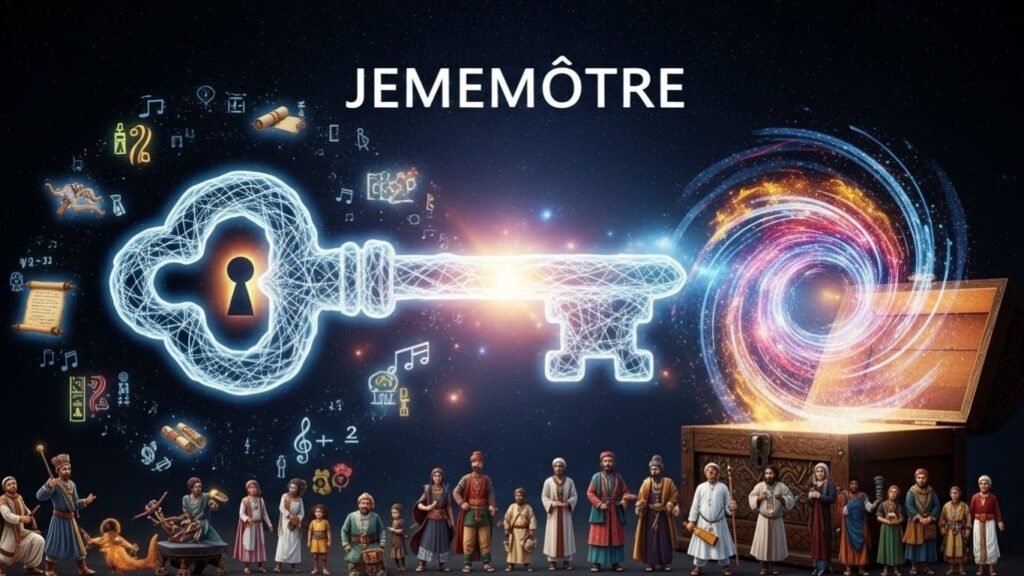
You might have seen the word ‘jememôtre’ pop up on social media, in art discussions, or within creative blogs and wondered what it means. Its unique sound and accented letter invite curiosity. Is it a place, a feeling, a philosophy, or something else entirely?
The term jememôtre is a captivating concept that blends self-expression, identity, and art. It has started to appear in various corners of our digital and cultural lives, sparking conversations about who we are and how we present ourselves to the world. This article will explore the meaning of jememôtre, its origins, and how you can engage with this fascinating idea.
What is Jememôtre?
At its heart, jememôtre is an open-ended concept rather than a word with a strict dictionary definition. This flexibility is what makes it so powerful. It can represent a state of mind, a personal journey, or an artistic movement.
Definition and Etymology
The word itself appears to be a creative blend of French elements, which gives us a clue to its meaning. Let’s break it down:
- “Je me”: This is French for “I” or “myself.”
- “Môtre”: This part is more stylistic. It could be a play on French words like montrer (“to show”), maître (“master”), or mètre (“to measure”).
Combining these parts, jememôtre can be interpreted as “I show myself,” “I master myself,” or “I measure myself.” Each interpretation points toward a central theme of self-awareness and intentional self-presentation.
The Core Concept
So, what is the core idea behind jememôtre? It refers to the conscious act of curating and expressing your inner self. It’s about taking your internal thoughts, feelings, and identity and translating them into an external form.
Think of it as both a process and an aesthetic. It’s not just what you choose to share about yourself, but how you choose to share it. This concept bridges the gap between our private inner world and our public-facing persona.
Historical and Cultural Context
While jememôtre is a relatively new term, the ideas it represents have deep roots in philosophy, art, and culture.
Philosophical Roots
The struggle between being authentic and performing for others is not a new one. Philosophers like Jean-Paul Sartre explored ideas of self-presentation and the “gaze” of others. Jememôtre can be seen as a modern take on these existential questions, adapted for an age of social media and digital identities. It’s about finding agency in how we appear to the world.
Artistic and Digital Evolution
Throughout the 20th and 21st centuries, art movements like Surrealism and Abstract Expressionism broke away from realistic representation. They focused on expressing inner worlds and emotions. Jememôtre follows this path, emerging as a sort of digital-age art movement. It emphasizes fluidity, abstraction, and the blending of technology with personal identity.
Cultural Symbolism
In some contexts, jememôtre is seen as a cultural symbol or even a physical place. This interpretation frames it as a destination rich with history, art, and community traditions. Whether seen as a mindset or a location, jememôtre consistently represents a deep connection to culture, heritage, and creative expression.
Applications of Jememôtre
How does this abstract concept show up in the real world? Jememôtre manifests in several distinct domains.
In Art and Creativity
For artists, jememôtre is a powerful tool for exploring identity. It encourages works that are fluid, interactive, and abstract. An artist might create a digital installation that changes based on a viewer’s presence, representing the dynamic nature of selfhood. It’s less about creating a static portrait and more about capturing an evolving process of self-revelation.
In Digital Tools and Platforms
Some envision jememôtre as a digital tool or platform for personal growth. Imagine an app where you could track your creative progress, log your moods through colors and symbols, or journal your journey with visual aids. This turns the philosophical concept into a practical tool for self-reflection and expressive customization.
In Personal Reflection
You don’t need to be an artist to practice jememôtre. It can be a powerful method for self-discovery through journaling, storytelling, or creating personal mood boards. It’s a way to document your inner life and understand the patterns and themes that emerge over time.
Benefits and Challenges
Like any compelling idea, jememôtre comes with both advantages and potential pitfalls.
Benefits
- Encourages Self-Awareness: By intentionally deciding what to show, we become more aware of our own values, feelings, and contradictions.
- Fosters Creative Freedom: The concept’s flexibility gives you permission to experiment with different forms of self-expression without being confined to rigid rules.
- Builds Connection: Sharing curated parts of our inner world can create empathy and connection. Others may see themselves in your expressions, leading to shared narratives and a sense of community.
Challenges
- Risk of Superficiality: A key criticism is that jememôtre could become just another form of performance. Instead of authentic reflection, it might encourage a more curated and polished facade.
- Emotional Burden: The pressure to constantly create and present an “expressive aesthetic” can be draining. It’s important to engage with it in a way that feels restorative, not stressful.
- Commercialization: As the term gains popularity, brands might co-opt it for marketing, potentially diluting its deeper meaning and turning it into a superficial trend.
How to Engage with Jememôtre
Ready to try it for yourself? Here are some practical steps to explore the concept of jememôtre in your own life.
Practical Steps
- Define Your Intent: Start by asking yourself what you want to “show.” Is it a specific emotion, a hidden talent, a personal conflict, or a value you hold dear?
- Choose a Medium: Find a medium that feels natural to you. This could be writing, sketching, digital collage, photography, or even creating a playlist.
- Start Small and Iterate: Don’t try to create a masterpiece on your first attempt. Begin with small, simple expressions. A single sketch, a short poem, or a photo can be a great starting point. Over time, you can build on these fragments.
An Example: Seven-Day Self-Expression Challenge
- Day 1: Choose a color that represents your mood today.
- Day 2: Write down a memory you rarely share.
- Day 3: Find a symbol that represents an inner conflict you’re facing.
- Day 4: Take a photo of something you usually hide from others.
- Day 5: Describe a “mask” you wear in public.
- Day 6: Create a short, abstract drawing of a feeling.
- Day 7: Share one small truth about yourself that you’ll show today.
At the end of the week, reflect on the experience. Which days felt most honest? Which expressions were the most difficult to create?
The Future of Jememôtre
As a concept still in its infancy, the future of jememôtre is unwritten. We may see it integrate more deeply with technology, such as through AI-generated art that helps us express our inner states or augmented reality (AR) installations.
It could also evolve into more formal movements, with dedicated manifestos, exhibitions, and creative communities. The main challenge will be to preserve the depth and authenticity of the idea as it becomes more visible and potentially more commercialized.
Frequently Asked Questions (FAQs)
What is the difference between jememôtre and just “being yourself”?
“Being yourself” often implies raw, unfiltered authenticity. Jememôtre is more about intentional expression. It’s the conscious act of curating and mediating how you show parts of yourself, which adds a layer of artistry and reflection.
Is jememôtre just a passing trend?
It’s possible. However, because it taps into timeless human questions about identity and self-representation, the core idea is likely to have lasting power, even if the term itself changes.
Can anyone practice jememôtre?
Absolutely. You don’t need to be a professional artist or philosopher. Anyone with a curiosity about self-expression and identity can engage with jememôtre through personal projects, journaling, or creative experiments.
What tools are good for practicing jememôtre?
Simple tools are often the best. This could include a physical notebook, a sketchbook, digital note-taking apps like Notion, or graphic design tools like Canva. The tool is less important than the intention behind using it.
Conclusion
Jememôtre is more than just a word; it’s an invitation to become the curator of your own identity. It exists at the crossroads of art, technology, and self-awareness, offering a framework for translating our hidden inner lives into visible, meaningful expressions.
Whether you approach it as an artistic practice, a tool for personal growth, or simply a lens for thinking about your place in the world, jememôtre provides a new way to navigate the complexities of who we are. We encourage you to explore this concept and see what truths you might uncover about yourself along the way.